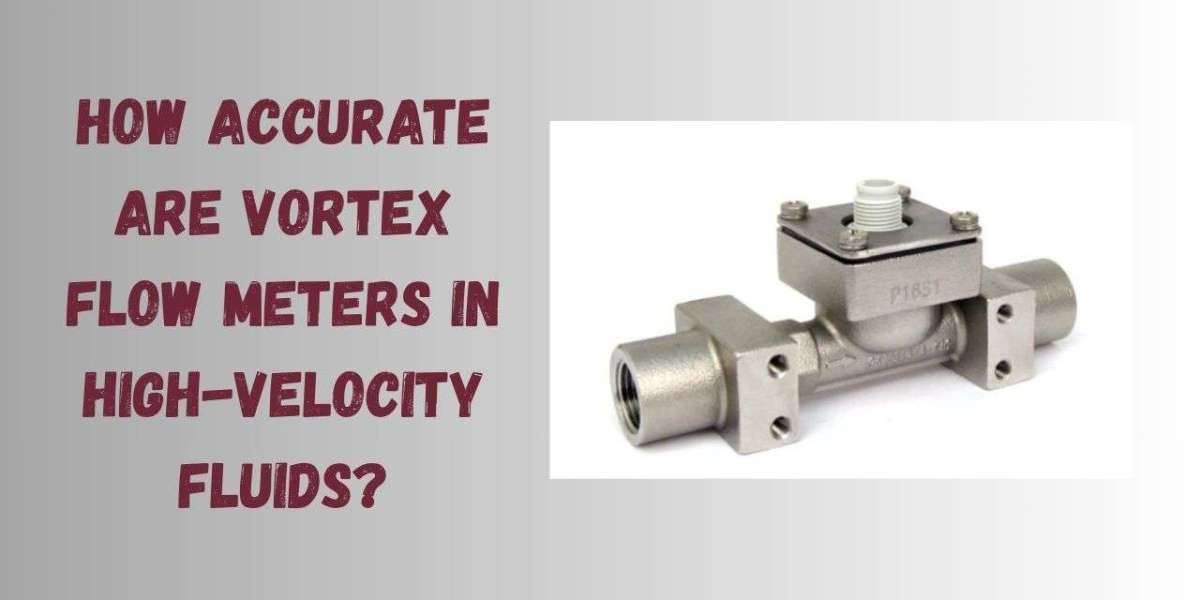

In industrial and water systems, measuring fluid flow accurately is crucial for efficiency, safety, and cost control. High-velocity fluids, commonly found in pipelines and process systems, demand precise monitoring to prevent system damage and ensure optimal performance. Vortex water flow meter have emerged as a reliable solution, utilising the principle of vortex shedding to measure flow rates with high accuracy. These meters are particularly valued in applications where turbulent or fast-moving fluids are present. Accurate flow measurement not only enhances operational efficiency but also safeguards equipment and reduces unnecessary expenses, making vortex flow meters an essential tool for modern fluid management.
Understanding Vortex Flow Meters
A vortex water flow meter measures fluid flow using the principle of vortex shedding. When fluid passes a bluff body—a non-streamlined obstruction—it creates alternating vortices downstream. These vortices generate pressure fluctuations, which sensors detect and convert into flow rate readings. The bluff body's design is crucial, as it ensures consistent vortex formation for accurate measurement. Vortex flow meters offer several advantages, including minimal moving parts, high reliability, and suitability for a wide range of liquids, gases, and steam. Their ability to endure extreme temperatures and high pressures makes them more suitable for industrial applications compared to mechanical or differential pressure flow meters.
Challenges in High-Velocity Fluid Measurement
- Increased Turbulence: At high fluid velocities, turbulent flow can develop, causing irregular vortex formation. This turbulence interferes with the stable shedding of vortices, reducing the accuracy of the vortex water flow meter and making readings less reliable.
- Pressure and Temperature Variations: Rapid fluctuations in pressure or temperature can alter fluid density and velocity, thereby affecting the detection of vortex frequency. These variations challenge the meter's ability to maintain consistent measurement, particularly in dynamic industrial processes.
- Viscosity Effects: Changes in fluid viscosity influence the formation and shedding of vortices. Higher viscosity can dampen vortex generation, while lower viscosity may increase frequency irregularities, both of which compromise the meter's precision.
Proteus V7000 Series: Precision in High-Velocity Environments
- Wide Flow Range: The Proteus V7000 Series vortex water flow meter can accurately measure flow rates from 1.8 to 150 LPM (0.48 to 40 GPM), making it ideal for a variety of high-velocity water applications.
- High Accuracy: With accuracy better than 3% of the flow range, this flow meter ensures dependable and precise measurements, critical for process control and monitoring.
- Versatile Calibration: It is calibrated to handle kinematic viscosities ranging from 0.3 to 12 cSt, allowing it to perform reliably in different fluid conditions and industrial setups.
- Durable Construction: Built with rugged stainless steel, the meter withstands demanding environments, offering long-lasting performance without compromising measurement reliability.
- Additional Capabilities: Optional temperature and pressure measurements range from -40 to 125°C and 0 to 1200 kPa, respectively, providing more comprehensive monitoring.
- Flexible Output Options: The meter supports pulse, resistance, 0–10 VDC, and 4–20 mA outputs, ensuring easy integration into diverse control systems.
Ensuring Optimal Performance
Ensuring optimal performance of a vortex water flow meter starts with proper installation. Following installation best practices, such as positioning the meter in straight pipe runs and avoiding turbulence, minimises measurement errors. Routine maintenance is crucial—regular inspections and cleaning help prevent buildup or damage that can compromise accuracy and reliability. Additionally, periodic calibration ensures the meter continues to provide precise readings over time. By adhering to these guidelines, operators can maximise reliability, extend the device's lifespan, and maintain consistent flow measurement. Proper care and calibration are essential for achieving accurate, long-term performance in any water flow system.
Conclusion
The V7000 Series vortex water flow meter is engineered for precise measurement of high-velocity fluids, making it ideal for demanding industrial applications. Its advanced vortex-sensing technology ensures accurate and reliable readings, even under turbulent conditions, providing operators with the confidence needed for critical processes. Selecting the right flow meter is crucial, as it directly impacts efficiency, safety, and operational cost. The V7000 Series offers a versatile solution that adapts to various pipeline conditions, delivering consistent performance. For projects requiring dependable fluid monitoring, consulting with experts or considering the Series can help ensure optimal results and long-term reliability.